More than 178 million new fractures occur globally every year, making bone fractures one of the most common orthopedic injuries requiring emergency and long-term medical care. Bone fractures can range from small hairline cracks to severe joint fractures and multiple bone injuries caused by falls, sports trauma, road accidents, osteoporosis, or high-impact injuries.
Patients often experience symptoms such as swelling, severe pain, bruising, restricted movement, deformity, or difficulty bearing weight after injury. Most simple fractures heal within 6–8 weeks, but severe leg fracture and joint fracture cases may require longer fracture recovery and rehabilitation support. Recovery timelines also depend on patient age, bone quality, nutritional status, and treatment method.
This guide explains major types of fracture, hairline fracture and joint fracture treatment, fracture recovery timelines, and important factors to consider while selecting fracture treatment in Delhi or fracture surgery in Vikaspuri.
Types of Fracture Explained by Orthopedic Specialists
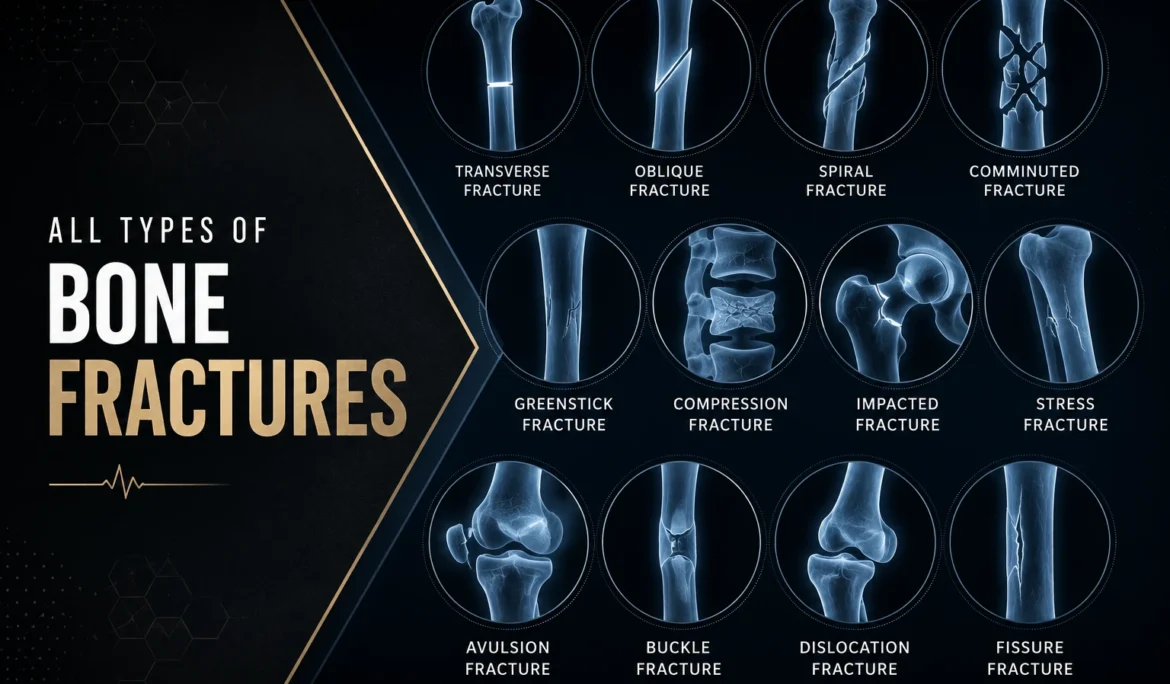
Orthopedic specialists classify fractures based on bone damage severity, fracture pattern, skin involvement, and joint stability. Different types of fracture require different treatment methods, recovery timelines, and rehabilitation approaches depending on the affected bone and injury complexity.
1. Hairline Fracture
Hairline fracture, also called a stress fracture, involves a small crack in the bone without complete separation. Sports injuries, repetitive stress, overuse, and running-related trauma commonly cause this fracture type.
Common symptoms include:
- Mild swelling
- Localized pain
- Tenderness during movement
- Difficulty bearing weight
Hairline fracture treatment usually includes rest, activity restriction, braces, and orthopedic monitoring.
2. Simple Fracture
Simple fracture occurs when the bone breaks without piercing the skin. The surrounding tissue usually remains protected.
Common causes:
- Falls
- Minor accidents
- Sports trauma
- Direct impact injuries
Most simple fractures heal with casts, splints, and temporary immobilization.
3. Compound Fracture
Compound fracture, also called an open fracture, occurs when broken bone penetrates the skin. This fracture carries a higher infection risk because surrounding tissue becomes exposed.
Emergency treatment may include:
- Wound cleaning
- Antibiotics
- Surgical stabilization
- Internal fixation procedures
4. Comminuted Fracture
Comminuted fracture occurs when the bone breaks into multiple fragments. High-impact accidents commonly cause this severe fracture pattern.
Common complications:
- Bone instability
- Delayed healing
- Soft tissue injury
- Longer fracture recovery
Many comminuted fractures require fracture surgery in Vikaspuri using plates, rods, or screws.
5. Joint Fracture
Joint fracture affects bone surfaces near joints such as the knee, hip, ankle, shoulder, or wrist. Delayed treatment may increase stiffness and arthritis risk.
Joint fracture symptoms include:
- Severe swelling
- Restricted movement
- Joint instability
- Pain during mobility
Orthopedic specialists often focus on restoring proper alignment and preserving long-term movement after joint fracture injuries.
6. Leg Fracture
Leg fracture may affect the femur, tibia, fibula, or ankle region. Severe leg fracture injuries can affect walking ability and weight-bearing function significantly.
Treatment commonly includes:
- Cast immobilization
- Bone realignment
- Internal fixation surgery
- Physiotherapy and rehabilitation
Fracture Recovery Timeline and Rehabilitation
Most simple fractures heal within 6–8 weeks, but fracture recovery timelines vary depending on fracture severity, bone location, patient age, nutritional status, and treatment method. Severe joint fracture and leg fracture cases may require rehabilitation for several months before normal movement returns fully.
Early Fracture Recovery Phase
The first few days after injury focus on:
- Pain control
- Swelling reduction
- Bone stabilization
- Immobilization support
Patients may require casts, splints, braces, or surgical fixation during this phase.
Weeks 2–6 After Fracture
New bone formation gradually stabilizes the fracture during this period. Doctors may recommend:
- Controlled movement exercises
- Partial weight-bearing
- Follow-up X-rays
- Joint mobility exercises
Hairline fracture recovery commonly progresses faster than severe leg fracture or joint fracture injuries.
Fracture Treatment Methods in Delhi
Fracture treatment in Delhi depends on fracture type, bone displacement, soft tissue injury, patient age, and joint involvement. Orthopedic specialists use X-rays, CT scans, and MRI imaging to evaluate fracture severity before selecting the most appropriate treatment approach.
1. Cast and Splint Treatment
Simple fractures and stable hairline fracture cases commonly heal with casts or splints. Immobilization helps maintain proper bone alignment during healing.
Cast and splint treatment commonly supports:
- Hairline fracture recovery
- Stable leg fracture management
- Wrist and ankle fractures
- Pediatric fractures
2. Closed Reduction
Closed reduction involves manually realigning displaced bone fragments without open surgery. Doctors commonly perform this procedure under anesthesia before applying a cast or splint.
Closed reduction is often used for:
- Arm fractures
- Certain leg fracture cases
- Joint fracture alignment
- Moderately displaced fractures
3. Internal Fixation Surgery
Fracture surgery in Vikaspuri may use internal fixation devices such as:
- Plates
- Screws
- Rods
- Pins
Orthopedic surgeons stabilize the fractured bone internally to restore alignment and support controlled bone healing.
Internal fixation commonly becomes necessary for:
- Severe leg fracture injuries
- Joint fractures
- Displaced fractures
- Multiple fracture fragments
4. External Fixation
External fixation stabilizes the fracture using metal pins connected to an external frame outside the body. Doctors commonly use this method in severe trauma injuries and open fractures involving soft tissue damage.
External fixation may support:
- Emergency fracture stabilization
- Severe swelling control
- Open fracture treatment
- Complex trauma management
Most simple fractures heal within 6–8 weeks, but severe leg fracture and joint fracture injuries may require longer rehabilitation, orthopedic monitoring, and physiotherapy support. Early diagnosis, proper fracture stabilization, and structured fracture recovery remain important for preserving bone alignment, joint mobility, and long-term physical function after injury.
Patients searching for fracture treatment in Delhi should seek immediate orthopedic evaluation after falls, road accidents, sports injuries, or sudden movement restriction because delayed treatment may increase risks of infection, stiffness, deformity, nerve injury, and delayed bone healing.
Patients looking for fracture treatment in Delhi or fracture surgery in Vikaspuri can consult the orthopedic specialists at UK Nursing Home for fracture evaluation, emergency orthopedic care, bone stabilization, and rehabilitation planning. The orthopedic team evaluates fracture severity, joint involvement, mobility limitations, and recovery requirements before recommending treatment.