
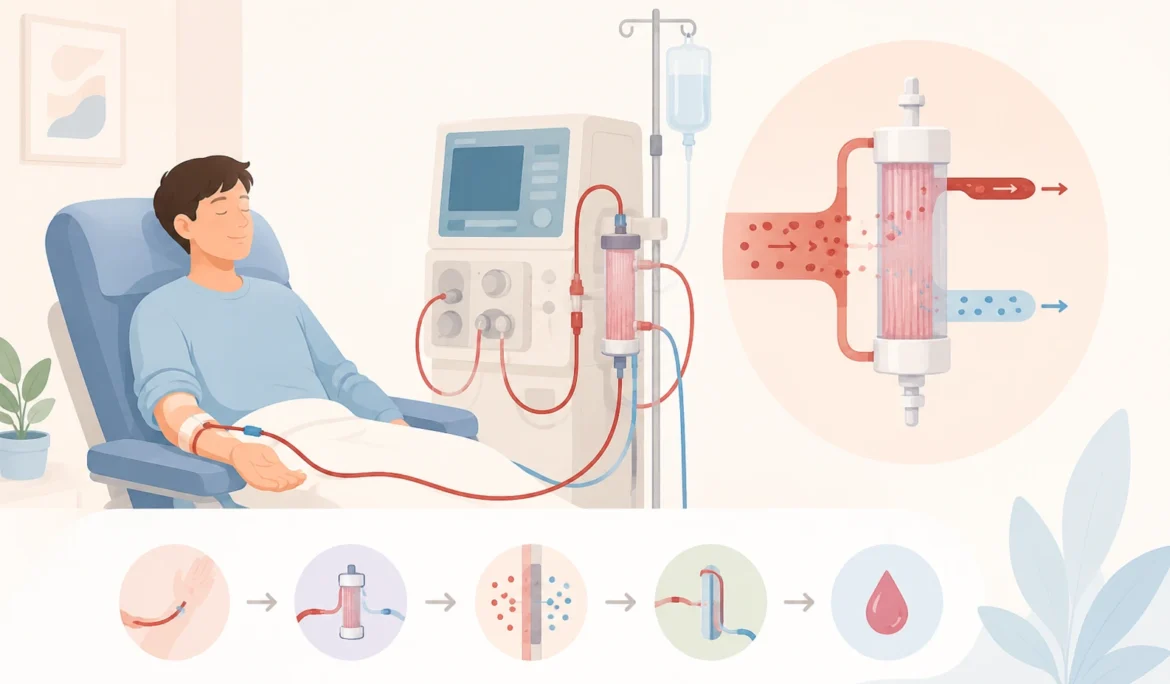
According to the National Institute of Diabetes and Digestive and Kidney Diseases, most hemodialysis patients require treatment 3 times weekly, with each session lasting about 3–5 hours. Kidney failure prevents the body from removing excess waste, salt, and fluid from the blood. Dialysis performs this filtration process artificially when the kidneys stop functioning properly.
Dialysis meaning in Hindi is “डायलिसिस,” a medical treatment that cleans the blood when kidney function declines severely. Doctors usually recommend dialysis for patients with chronic kidney disease, kidney failure, uncontrolled diabetes-related kidney damage, or severe fluid retention.
In hospitals and dialysis centres in Delhi mainly use hemodialysis and peritoneal dialysis. Hemodialysis removes blood through a machine called a dialyzer, filters toxins, and returns clean blood to the body. Most dialysis centres in Vikaspuri schedule treatment 2–3 times weekly depending on the patient’s condition, creatinine levels, and doctor recommendations.
Dialysis charges in Delhi vary by hospital type, machine support, ICU requirement, and emergency access. Patients searching for 24×7 centres should also verify nephrologist availability, emergency dialysis support, NABH accreditation, and infection-control standards before starting long-term treatment.
How Dialysis Is Done in Delhi Hospitals
Most hemodialysis sessions in Delhi take about 3–5 hours and patients usually require treatment 3 times every week. Doctors first create vascular access before starting regular dialysis treatment. This access allows blood to move safely from the body to the dialysis machine.
Hemodialysis Procedure Step-by-Step
Doctors commonly create an arteriovenous (AV) fistula in the patient’s arm several weeks before treatment begins. The fistula connects an artery and vein to improve blood flow for repeated dialysis sessions. Some emergency patients may receive a temporary catheter near the neck or chest if immediate dialysis becomes necessary.
During hemodialysis, the dialysis machine removes blood through tubes connected to the vascular access point. The blood passes through a dialyzer, also called an artificial kidney, which removes waste products, toxins, and extra fluid. Clean blood then returns to the patient’s body through another tube.
How Long One Dialysis Session Takes
One standard dialysis session generally lasts between 180 and 300 minutes depending on the patient’s kidney function, body weight, and toxin levels. Patients with advanced kidney failure may require more frequent monitoring and additional sessions during hospitalization.
Hospitals in West Delhi, Vikaspuri usually schedule dialysis in morning, evening, or overnight shifts. Patients searching for a 24×7 dialysis centre should confirm emergency nephrologist support, infection-control protocols, and dialysis machine availability before beginning long-term treatment.
Types of Dialysis Available
The National Kidney Foundation identifies 2 major dialysis methods: hemodialysis and peritoneal dialysis. Hospitals and dialysis centres in Delhi mainly provide these treatments depending on kidney condition, infection risk, and doctor recommendations.
Hemodialysis in West Delhi
Hemodialysis remains the most commonly used dialysis treatment in West Delhi, including areas such as Vikaspuri. During this procedure, the dialysis machine filters blood outside the body through a dialyzer before returning clean blood to circulation.
Most private dialysis centres provide scheduled daytime, evening, and emergency overnight dialysis sessions. Patients with kidney failure, diabetes-related kidney damage, or severe fluid retention usually require repeated hemodialysis multiple times every week.
Peritoneal Dialysis Option
Peritoneal dialysis uses the abdominal lining instead of an external dialyzer machine. Doctors place a catheter inside the abdomen to allow dialysis fluid to absorb waste products and extra fluid from the blood.
Some nephrology centres in Delhi recommend peritoneal dialysis for patients who prefer home-based treatment or require greater scheduling flexibility. Patients considering this option should verify infection-control training, catheter-care support, and emergency medical availability before starting long-term dialysis treatment.
Dialysis Charges in Delhi
Practo estimates dialysis charges in Delhi between ₹2,625 and ₹3,150 per session, while advanced haemodialysis procedures may cost up to ₹6,300 in private hospitals. Dialysis costs vary according to hospital infrastructure, ICU support, emergency treatment requirement, and nephrologist supervision.
Average Dialysis Charges
| Dialysis Type | Estimated Cost Per Session |
| Standard Hemodialysis | ₹2,100 – ₹3,150 |
| Advanced Hemodialysis | ₹3,500 – ₹6,300 |
| Emergency ICU Dialysis | ₹5,000+ |
| Peritoneal Dialysis | Varies by catheter and fluid usage |
Private hospitals and Nursing Homes in Delhi generally charge higher fees for infection-controlled units, 24×7 nephrologist availability, and ICU-connected dialysis machines. Government-supported dialysis centres may offer subsidized treatment for eligible patients under Delhi health schemes.
Monthly and Annual Dialysis Cost in India
Patients undergoing regular hemodialysis usually require treatment 3 times weekly. Monthly dialysis expenses in India can therefore become significant for long-term kidney disease management.
DCDC Kidney Care estimates yearly dialysis expenses in India between ₹5 lakh and ₹10 lakh for patients requiring ongoing treatment. Additional expenses may include blood tests, nephrologist consultations, medicines, injections, vascular access surgery, and emergency hospitalization.
Government Dialysis Support in Delhi
The Delhi Government operates subsidized haemodialysis services in 3 government hospitals under the PPP Dialysis Project. Eligible patients may receive reduced-cost or cashless dialysis support depending on residency status, income eligibility, and medical condition.
Patients searching for a 24×7 dialysis centre in West Delhi or Vikaspuri should confirm emergency dialysis availability, ICU backup, machine sterilization standards, and nephrologist presence before comparing treatment costs.
More than 500,000 people in the UK live with chronic kidney disease requiring ongoing medical monitoring and supportive care. Patients needing dialysis often require structured nursing support, medication management, infection monitoring, and regular health supervision. Selecting the right nursing home becomes important for maintaining treatment continuity, emergency response access, and long-term comfort.
Families searching for nursing homes should verify 24×7 medical staffing, renal care experience, emergency transfer support, medication management systems, and hygiene standards before admission. Nursing facilities with trained renal-care staff can better support elderly patients receiving dialysis treatment multiple times every week.
Looking for reliable nursing home support for dialysis patients in the UK? Speak with a qualified care team of UK Nursing Home to understand medical supervision, renal care support, emergency response availability, and long-term patient management options before choosing a facility.