Stomach pain medically referred to as abdominal pain is one of the most common symptoms prompting people to seek medical care, with studies showing that abdominal pain accounts for about 2.8 % of visits to General Physicians and Internal Medicine specialists, and serious conditions like gastroenteritis, IBS, and gastritis are frequent underlying causes.
This pain can range from a mild, dull ache to a sharp, severe cramp and may occur anywhere between the chest and the groin area. Many people experience stomach pain after eating, around the lower abdomen, or alongside symptoms such as bloating, fever, or loose motions.
In this guide, you’ll learn the types of stomach pain based on symptoms and location, common causes, safe home care methods, treatment options, and when to get treatment for abdomen pain in Delhi.
Common Causes of Stomach Pain
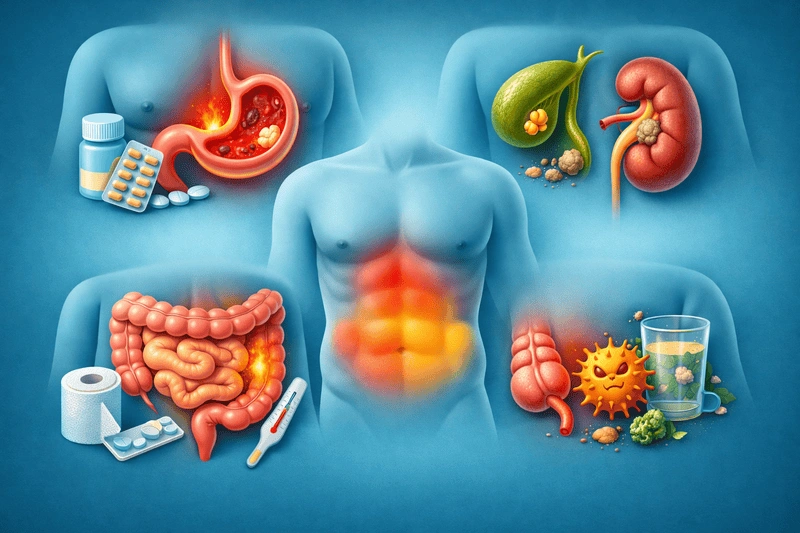
Stomach pain arise from multiple sources, ranging from everyday digestive upsets to more serious medical conditions. Often, the location and nature of the pain, along with other symptoms like nausea or fever, help indicate the cause.
1. Digestive Irritation (Gas & Indigestion)
Most frequent causes of stomach pain is acidity, gas buildup or indigestion. Eating too fast, fatty/spicy foods, or large meals can overload the digestive system, leading to cramping, bloating, and discomfort in the upper abdomen. This type of pain occurs soon after eating and may be accompanied by burping or a feeling of fullness. You can follow the home remedies for acidity as the first line of treatment for abdominal pain.
2. Gastritis & Ulcers
Inflammation of the stomach lining known as gastritis can cause a burning or gnawing pain in the upper belly. Common triggers include bacterial infections like Helicobacter pylori, regular use of pain relievers (NSAIDs), alcohol, and stress. Untreated gastritis may progress to peptic ulcers and chronic discomfort.
3. Gastroenteritis (Stomach Flu)
Infections of the stomach and intestines caused by viruses, bacteria, or contaminated food and water — can lead to stomach ache along with diarrhea, nausea, and vomiting. These symptoms often come on suddenly and may be more intense but typically resolve in a few days with hydration and rest.
4. Functional Disorders (IBS & Food Intolerances)
Chronic digestive conditions like Irritable Bowel Syndrome (IBS) can cause recurring abdominal cramps, bloating, and changes in bowel habits. Food intolerances (e.g., lactose or gluten sensitivity) can also irritate the gut and trigger pain after consuming certain foods.
5. Other Organ-Related Conditions
Some causes extend beyond common digestive irritation:
- Gallstones or gallbladder inflammation
- Appendicitis (severe pain usually starting near the belly button and moving to the lower right side)
- Kidney stones or infections
- Gastroesophageal reflux disease (GERD)
- Inflammatory bowel diseases (Crohn’s or ulcerative colitis)
These conditions require specific tests and Gastroenterology treatment in Vikaspuri.
When Should You See a Doctor for Stomach Pain?
If abdominal pain lasts more than 24–48 hours, becomes severe, or is accompanied by vomiting, fever, or blood in stool, consult a stomach pain specialist in Vikaspuri immediately.
Types of Stomach Pain Based on Location & Sensation
The location of stomach ache where it’s felt in the abdomen gives clues about the cause. Below is a practical breakdown to help you understand what different pain patterns indicate.
Upper Abdomen Pain (Above the Belly Button)
Pain in the upper central area just above the belly button is related to issues with the stomach, gallbladder, pancreas, or esophagus.
Common causes include:
• Gastritis / acid reflux: burning pain, often worsens after meals.
• Peptic ulcers: gnawing pain that comes and goes.
• Gallbladder problems: sharp pain under right ribs, especially after fatty food.
• Pancreatitis: intense pain that may radiate to the back.
Lower Abdomen Pain
Pain in the lower belly can relate to the intestines, bladder, uterus, or appendix.
Typical causes:
• IBS or constipation: crampy, intermittent pain.
• Appendicitis: starts near belly button then moves to lower right (sharp).
• Urinary tract issues: burning pain or frequent urge.
• Menstrual cramps / period pain (in those who menstruate): dull, crampy ache.
Left Side Lower stomach pain
Pain in the lower left abdomen can be associated with the large intestine and related conditions.
Common triggers include:
• Diverticulitis / colon irritation: steady pain.
• Constipation: dull ache with bloating.
• Gas trapped in the colon: sharp spasms.
Right Side Abdomen Pain
Right-side abdominal pain may signal issues like:
• Appendicitis (early stages): near the belly button first.
• Gallbladder inflammation / stones: upper right pain after meals.
• Kidney stones: severe flank pain radiating to the groin.
Central Cramping or Diffuse Pain in Abdomen
Sometimes pain isn’t confined to one spot and may feel like cramps, waves, or aching all over.
Typical causes:
• Indigestion or gas cramps after meals
• Viral gastroenteritis: generalized soreness + diarrhea/vomiting
• IBS flare-ups: recurrent lower abdominal cramps
Stomach Pain Patterns & What They Suggest
| Pain Location | Common Causes |
| Upper centre | Gastritis, acid reflux, ulcers |
| Upper right | Gallbladder, bile issues |
| Lower centre | IBS, constipation, appendicitis |
| Lower left | Gas, colon irritation |
| Diffuse / crampy | Indigestion, viral infection |
Home Remedies for Stomach Pain
Mild stomach pain can be managed safely at home using simple remedies and lifestyle adjustments. These methods provide relief while monitoring symptoms before seeking gastro treatment care.
1. Hydration is Key for stomach issues
Drinking adequate water helps flush out toxins, improves digestion, and prevents dehydration — especially important when stomach pain comes with loose motion or diarrhea. Sip small amounts of water frequently rather than large volumes at once.
2. Gentle Diet Adjustments
- Eat small, light meals instead of heavy, fatty foods.
- Avoid spicy, oily, or fried food that can worsen gastritis or acid reflux.
- Incorporate easily digestible foods like rice, toast, bananas, and yogurt.
3. Warm Compress / Heat Therapy
Applying a warm water bag or heating pad to the abdomen relaxes muscles and relieves cramping, especially in lower abdominal or menstrual pain.
4. Herbal Remedies for stomach pain
- Ginger tea: Reduces bloating and eases nausea.
- Mint leaves / peppermint tea: Relieves gas and indigestion.
- Fennel seeds: Can help with bloating and gas discomfort.
Note: Herbal remedies are safe for most adults but should be avoided in pregnancy or if allergic.
5. Rest and Gentle Movement
- Rest in a comfortable position and avoid strenuous activity during acute pain.
- Light walking can stimulate digestion and reduce gas pain.
What to do When Home remedies don’t give any relief to the abdomen
If stomach pain:
- Persists for more than 24–48 hours
- Worsens over time
- Is accompanied by high fever, vomiting, or blood in stool
…it’s critical to consult a doctor in Vikaspuri or visit a local hospital or Nursing Home in Delhi immediately.
Medicines & Treatment Options for Stomach Pain
Stomach pain can sometimes be managed with over-the-counter (OTC) medicines or may require doctor-prescribed treatment, depending on severity and underlying cause. Safe use and proper guidance are essential.
Over-the-Counter (OTC) Options
1. Antacids
- Neutralize stomach acid and relieve heartburn or gastritis-related pain.
- Common types: calcium carbonate, magnesium hydroxide.
- Best for upper abdomen pain after meals.
2. Antispasmodics
- Relax intestinal muscles to ease crampy lower abdominal pain caused by IBS or gas.
- Useful for stomach pain lower abdomen and left-side pain.
3. Probiotics
- Restore healthy gut bacteria and help with loose motion or bloating.
- Particularly helpful after a mild gastroenteritis episode.
Note: Always follow package instructions; prolonged use requires medical advice.
Doctor-Prescribed Stomach Pain Treatment
Some cases require specialist intervention, particularly when OTC medicines fail or symptoms indicate a serious condition:
- Proton Pump Inhibitors (PPIs)
- Reduce acid production for ulcers, gastritis, or reflux.
- Antibiotics
- Prescribed for H. pylori infections or bacterial gastroenteritis.
- Laxatives or Anti-diarrheal medicines
- For chronic constipation or persistent diarrhea under medical supervision.
- In cases like appendicitis, gallstones, or severe hernia, surgery may be required.
Key Guidelines for Medicine Use
- Do not self-medicate for severe, persistent, or location-specific pain.
- Always consult a stomach pain doctor in Vikaspuri, Delhi for recurring symptoms.
- Keep track of pain patterns and any accompanying symptoms to assist diagnosis.
Stomach pain ranges from mild, temporary discomfort to serious medical conditions. Mild pain can often be managed with home remedies, dietary adjustments, and OTC medicines, while severe or persistent symptoms require treatment.
If you or a loved one experiences stomach pain that is persistent, severe, or accompanied by red-flag symptoms, schedule a consultation with a stomach pain doctor at UK Nursing Home in Delhi today.
Or Call us on: 011 4095 5555